Complete Guide to Multilingual Website Development 2025
1. What Is a Multilingual Website and Why Is It Essential?
Definition of a Multilingual Website
A multilingual website is not simply a translation of Japanese content into other languages. It is a web platform that provides information in multiple languages, enabling users worldwide to comfortably browse and engage with content in their native language. This serves as a critical foundation for international customers to understand your products and services, building the confidence they need to make purchasing decisions.
Current State and Opportunities in the Global Market
The global cross-border e-commerce market reached $521 billion in 2024, representing approximately five times growth compared to 2015. Furthermore, the worldwide B2C e-commerce market is estimated at 926 trillion yen in 2024, presenting enormous business opportunities in global markets. In this environment, multilingual website development has become an essential strategy for reaching international prospects and securing new revenue streams.
Expanding Inbound Demand
With the recovery and growth of inbound tourism to Japan, the importance of multilingual information provision continues to increase—from pre-visit research to service utilization during visits and repeat purchases after returning home. Data shows that 76% of online consumers prefer to purchase from websites displayed in their native language, and 40% will not buy from sites in other languages. Breaking through this "language barrier" is the key to maximizing business opportunities.
2. Three Key Benefits of Multilingual Website Development
Acquiring International Customers
The greatest benefit is reaching new customer segments abroad. Nine out of ten internet users report they always visit websites in their own language when available. English-only websites can only reach approximately 19% of the world's population. Multilingual capability opens doors to vast markets previously beyond reach.
Improved SEO Performance
Content optimized for each language improves rankings on search engines in respective countries (Google, Baidu, etc.). This increases organic traffic from users worldwide and enhances global brand awareness. Proper multilingual website development combined with SEO strategies becomes a powerful tool for sustainable customer acquisition without advertising costs.
Enhanced Brand Trust
Providing information in customers' native languages demonstrates consideration and respect for your audience. This fosters trust and confidence in your company and brand. Particularly for high-value products or specialized services, detailed information in the native language becomes a crucial factor in driving purchase decisions.
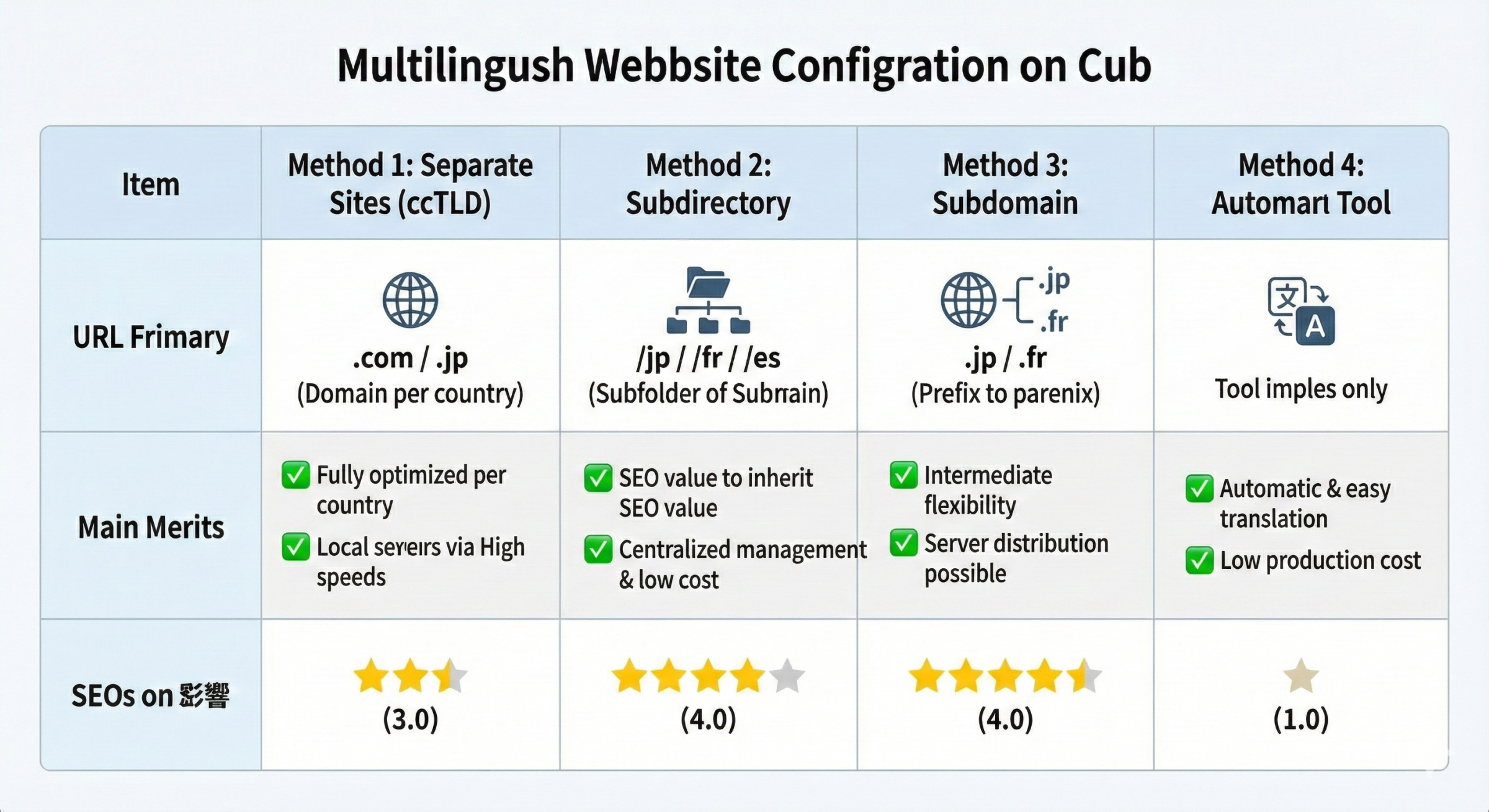
3. How to Build a Multilingual Website: Four Methods
There are four main methods to build a multilingual website. Each has its advantages and disadvantages, so it's important to select the optimal approach based on your company's objectives and budget.
4. Cost Estimates for Multilingual Website Development
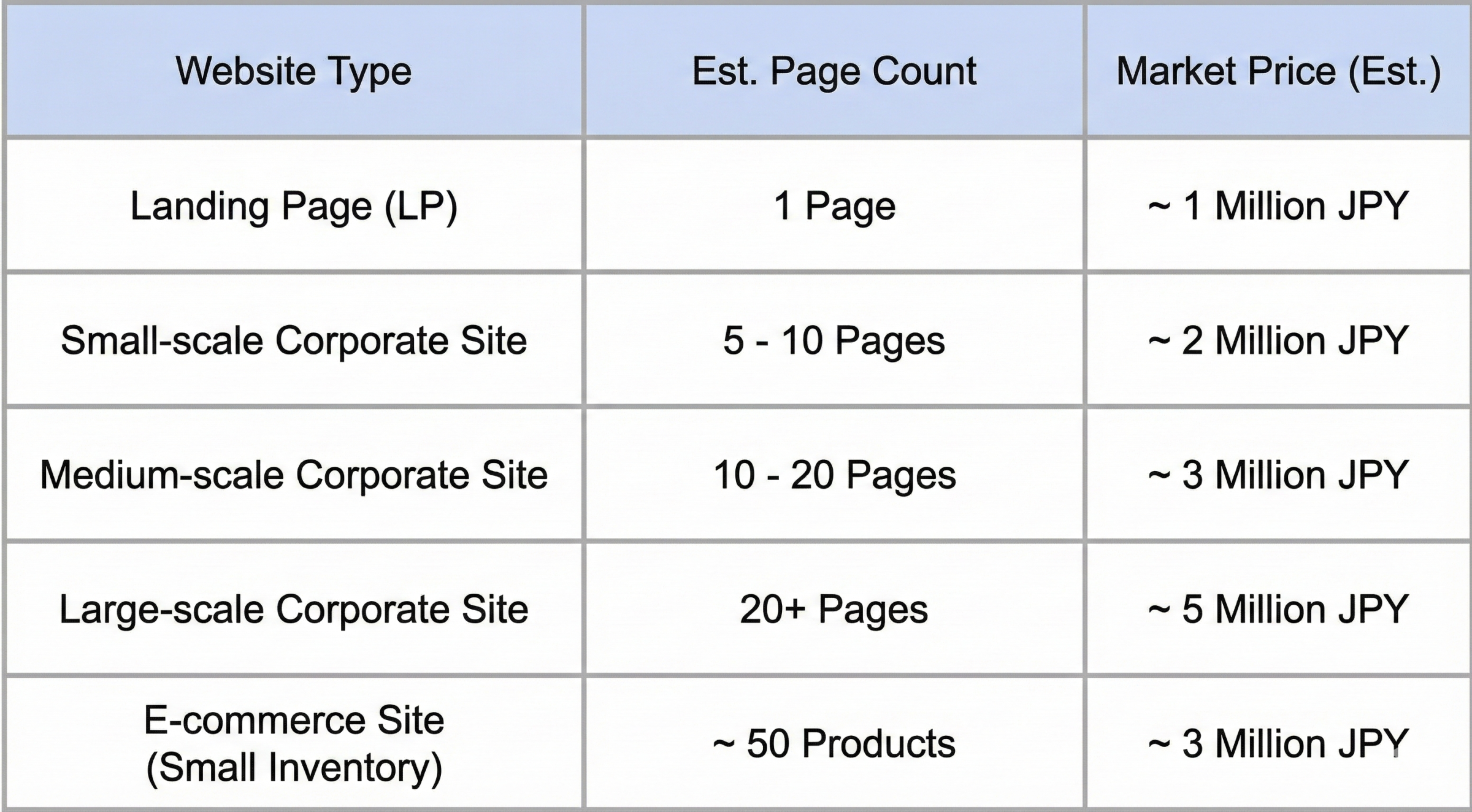
The cost of multilingual website development varies significantly based on site scale, number of supported languages, and translation quality. A basic guideline is: Standard site development cost × Number of languages + Additional costs.
Cost Guidelines by Number of Languages
Compared to a standard Japanese-only website, multilingual sites typically cost 1.5 to 3 times more. This includes not only translation work but also language switching functionality, SEO settings for each language, and design adjustments.
5. Five Essential Tips to Avoid Multilingual Website Pitfalls
-
Don't Rely Solely on Machine Translation: Machine translation is convenient but not perfect. For brand-critical elements like taglines and technical terminology where accuracy matters, always have native speakers review or translate (localize) the content.
- Consider Cultural Differences: Color preferences, lucky numbers, and photo models vary significantly by country and region. Success requires not just direct translation from Japanese but content optimization (culturalization) tailored to your target market.
- Implement Proper SEO Settings (hreflang tags): Setting up "hreflang" tags is essential to correctly signal to search engines which language/region each page targets. Neglecting this can result in wrong language pages appearing in search results, leading to lost opportunities.
- Localize UI/UX: Text length varies by language. For example, translating from Japanese to German can increase character count by 1.5 times or more. Design UI with flexibility to prevent layout breaking, and create navigation (UX) that users from each country can intuitively operate.
-
Establish Maintenance & Operations Structure: A multilingual website isn't finished once launched. Plan ahead for ongoing operations including customer inquiries in each language, regular content updates, and compliance with changing regulations.
| Target Region | Languages | Notes |
|---|---|---|
| If expanding to Southeast Asia | English, Chinese, Malay | Especially in Malaysia and Singapore, multiple languages coexist due to diverse ethnic groups, so supporting multiple languages is effective. |
| If for Greater China | Simplified Chinese (Mainland China, Singapore, etc.) and Traditional Chinese (Taiwan, Hong Kong, etc.) | Even within the same Chinese language, different characters are used, so supporting both is desirable. |
| If expanding to Western countries (Europe & Americas) | English, Spanish | Spanish is spoken not only in Spain but also widely in the US and Latin America, covering a huge market. |
6. Recommended Languages by Target Market
Rather than randomly adding languages, it's crucial to clearly identify your target market and strategically select languages.
7. How to Choose a Multilingual Website Development Agency
Two Key Checkpoints
It's no exaggeration to say that multilingual website success depends on choosing the right development agency. First, extensive multilingual website portfolio is essential. Agencies with numerous projects have experience across various industries and target markets, and are well-versed in troubleshooting. Second, verify their familiarity with international cultures and business practices. The key to success is partnering with a firm that understands target market cultural backgrounds and can propose appropriate localization—not just a translation company.
How to Evaluate Portfolio
When reviewing portfolios, look beyond industry and supported languages to understand "what challenges were solved" and "what results were achieved." Whether the agency has contributed to client business growth, not just built websites, is the true measure of their capability.
Importance of Support Structure
Post-launch operations are critical for multilingual websites. Continuous support is needed for handling inquiries in each language, content updates, and regulatory compliance. Always confirm before signing that robust support structures are in place.
8. Bridge CX Multilingual Website Development Services
"Not sure where to start?" "Uncertain about achieving results?" If these concerns sound familiar, please consult Bridge CX.
- Japanese Quality × Local Market Understanding: We combine high-quality Japanese creative with deep localization based on thorough understanding of target market cultures and needs. We build global websites that truly communicate.
- Specialized Track Record in Malaysia Expansion: We specialize in supporting expansion into the rapidly growing Malaysian market. We have successfully guided many Japanese companies through Malaysia's complex linguistic and cultural landscape.
-
One-Stop Solution from Localization to Marketing: Beyond website development, we provide comprehensive international marketing support including post-launch SEO, social media management, and advertising.
【Case Study】
Company A built a cosmetics e-commerce site for the Malaysian market. Initially, they launched with only Japanese site translations, but sales remained stagnant. Bridge CX comprehensively localized the design and content for Muslim women, and implemented influencer marketing. As a result, sales increased 5x within six months.
9. Conclusion: Unlock International Markets with Multilingual Websites
In today's accelerating globalization, multilingual websites are no longer a special initiative—they are becoming essential for sustained business growth. By properly understanding implementation methods, costs, and key considerations, and approaching the project strategically, you can seize the vast potential of international markets.
For consultations and quotes on multilingual websites, please feel free to contact Bridge CX. We will powerfully support your international expansion.
References
[1] JETRO. (2025). 価格競争から価値競争へ、越境ECの新時代.
[2] 経済産業省. (2025 ). 令和6年度 電子商取引に関する市場調査.
[4] Weglot. (2025 ). Top Multilingual Website Stats and Localization Trends for 2025.