What is Website Localization? A Complete Guide to Succeeding in Southeast Asian Markets
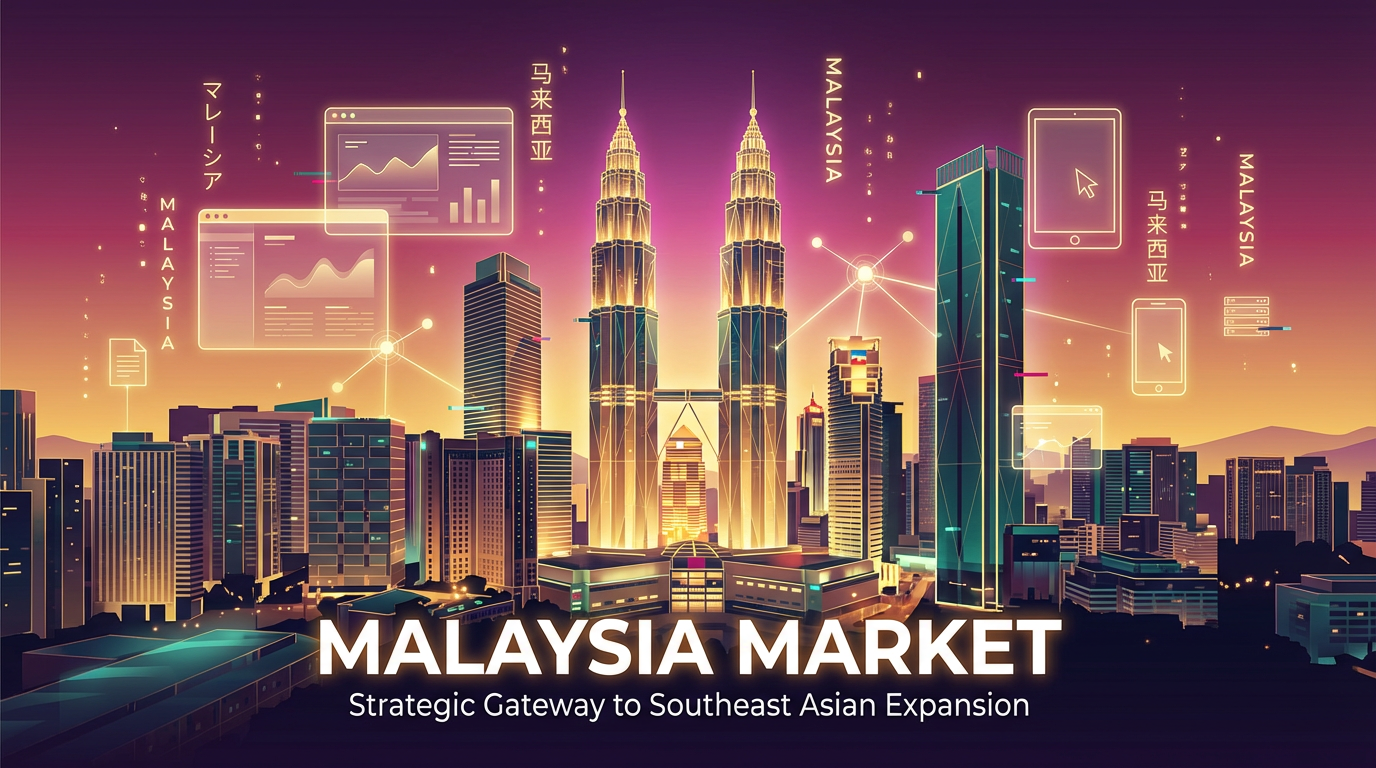
What is Website Localization? A Complete Guide to Succeeding in Southeast Asian Markets
When considering expansion into overseas markets, website localization is an essential step that cannot be overlooked. Particularly in the rapidly growing Southeast Asian market, building a website that resonates with local users holds the key to business success.
This article provides a comprehensive guide covering everything from the basic concepts of website localization to practical tips specifically for Southeast Asian markets, including Malaysia.
What is Website Localization?
Website localization is the process of optimizing an existing website to align with the language, culture, and business practices of a target market. Unlike simple translation, its goal is to provide a natural and familiar experience for local users.
The Difference Between Translation and Localization
Translation is the task of converting text from one language to another. Localization, on the other hand, goes beyond language to comprehensively adapt design, images, date and time formats, currency, cultural meanings of colors, user interfaces, and even legal requirements for the local market.
For example, seasonal expressions and visuals commonly used on Japanese websites may not resonate in the tropical climate of Southeast Asia. Similarly, the honorific expressions and indirect communication style characteristic of Japanese can sound unnatural when directly translated into English or Malay.
.png)
Why is Website Localization Important?
Research shows that approximately 75% of consumers prefer to purchase from websites that provide information in their native language. Even users who understand English tend to prefer content adapted to their own language and culture.
In many cases, a website serves as the first point of contact with potential customers. A website that hasn't been localized can give local users the impression that "this company doesn't value our market."
Characteristics of the Southeast Asian Market and the Need for Localization
Southeast Asia is a massive market with a population of approximately 700 million people. Along with rapidly increasing internet penetration, the e-commerce market is also experiencing explosive growth. However, succeeding in business in this region requires understanding the unique characteristics of each country.
Characteristics of the Malaysian Market
Malaysia is a multi-ethnic, multilingual nation where Malay, English, Chinese, and Tamil are used in daily life. There are over 33 million internet users, with more than 80% accessing the web via mobile devices.
Google holds an overwhelming market share (over 97%) for search engines, making SEO measures crucial in this market. Social media usage is also extremely high, with product discovery through Facebook and TikTok being common.
Language Selection Strategy
When building a website for the Malaysian market, language selection needs to be carefully considered based on your target customer segment.
English: Suitable for reaching a broad audience and is the most common choice for business purposes.
Malay: Effective for reaching Malay consumers and enhances credibility as a local brand.
Chinese: Effective for approaching affluent consumers and the Chinese business community.
Ideally, it's recommended to build a multilingual site that supports multiple languages, allowing users to select their preferred language.
Key Points for Successful Website Localization
1. Cultural Adaptation (Culturalization)
Beyond translating text, images, colors, and layouts also need to be adapted to the local culture. For example, while white symbolizes cleanliness in Japan, it may be associated with mourning in some Asian countries.
Additionally, content that requires Japan-specific background knowledge, wordplay, slang, and humor won't resonate with local users when directly translated. Content needs to be reconstructed with consideration for the cultural context of the target market.
2. Technical SEO Measures
The following technical elements are important for SEO on multilingual websites:
Hreflang tag configuration: Communicates the relationship between language pages to Google and displays the appropriate language page in search results.
URL structure optimization: Choose either the subdirectory method (example.com/ja/, example.com/en/) or subdomain method (ja.example.com) and maintain consistency.
Language-specific XML sitemaps: Enable efficient crawling of pages in each language version.
Mobile-friendly design: Responsive design is essential as mobile usage rates are extremely high in Southeast Asia.
3. Local Keyword Strategy
Simply translating keywords used in Japanese is not enough. You need to research the search queries that local users actually use and optimize for those keywords.
In Malaysia, search queries often mix English and Malay, with local expressions being common. Understanding region-specific expressions like "best nasi lemak KL" or "kedai tayar murah di Kuala Lumpur" (cheap tire shop in Kuala Lumpur) is important.
4. User Experience Optimization
Place the language switching function where users can intuitively access it. Supporting local payment methods (GrabPay, Touch 'n Go, and online banking are popular in Malaysia) and displaying prices in local currency also significantly contribute to improving conversion rates.
.png)
Common Mistakes in Website Localization
Over-reliance on Machine Translation
While AI and machine translation tools are convenient, their accuracy tends to be low for languages like Malay where sample data is limited. Marketing content and important messages must always be checked and adjusted by native speakers.
Unclear Target Definition
Proceeding with localization without considering the racial and ethnic composition of the target region, languages used, B2C versus B2B distinctions, and income levels of target users will result in limited effectiveness. Prior market research and target definition are essential.
Technical Configuration Oversights
There are cases where technical elements like hreflang tags, sitemap configuration, and mobile optimization are neglected while focusing on content translation. Insufficient configuration of these elements will hinder proper display in search engines.
Steps for Website Localization
We recommend the following steps to achieve effective website localization.
Conclusion
Website localization is an extremely important investment for overseas market expansion. The key to success lies not in mere language translation, but in deeply understanding the culture, language habits, and user behavior of your target market, and optimizing your entire site based on that understanding.
In the Southeast Asian market particularly, multilingual and multicultural support, mobile-first design, and local SEO measures are essential. By implementing these appropriately, you can capture the hearts of local users and drive business results.
Bridge CX provides comprehensive support for website localization targeting Southeast Asian markets for Japanese companies. Based in Malaysia, our mixed team of Japanese and Malaysian professionals delivers optimal localization that covers not only language but also cultural aspects. If you're considering expansion into Southeast Asian markets, please feel free to contact us.